
What is Mental Health Awareness?
What is Mental Health Awareness and what do we need to achieve it?
What is mental health Awareness? It is one thing to acknowledge that mental health exists and is something we need to look after, but it is a completely different thing knowing when and how it needs taking care of.
For me, mental health awareness is not a week or a month, it is a daily ritual. To be truly aware of your mental health is to know where you’re at behaviourally, emotionally and cognitively on any given day. It is a constant check in, whenever you feel off kilter, tired, frustrated, triggered, stressed, sad, or angry. It is the ability to look inside and ask, ‘why is this happening and what do I need’.
In order to achieve this, we need a vocabulary and a framework to identify and understand these emotions and concepts. We can ask questions like ‘What is it inside me that triggers this feeling of childish helplessness’, ‘What have I experienced that means this scares me?’, ‘How am I different now to how I was then’, ‘do I have the power, in the here and now, to ask for my needs to be met?’, ‘Who’s voice is this critical internal monologue?’.
These are big questions to ask, and that is exactly where therapy can help. It can be an invaluable opportunity to ask these questions in a safe, non-judgemental, supportive and reflective environment.
We are all products of our past; outcomes of decisions we made without a clear and accurate view of the options. Unless we become aware of these decisions and somehow change them, the patterns will keep repeating, the outcome remaining the same.
Through attuned, empathic enquiry, as a therapist, I can guide you to understand how you became who you are and why you react the way you do to things. I will help you identify historical decisions and re-evaluate them in the here and now, with an unbiased view of your options and your abilities. I will equip you with the vocabulary and tools to identify feelings, isolate their causes, and react from a rational and autonomous position of power.
For me, mental health awareness is understanding when you’re acting to your detriment; not thinking, feeling or being in the here and now, and knowing what to do to change that.
If you’re interested in learning more about Transactional Analysis therapy, what it is and how it can help, please get in touch to arrange a free consultation.
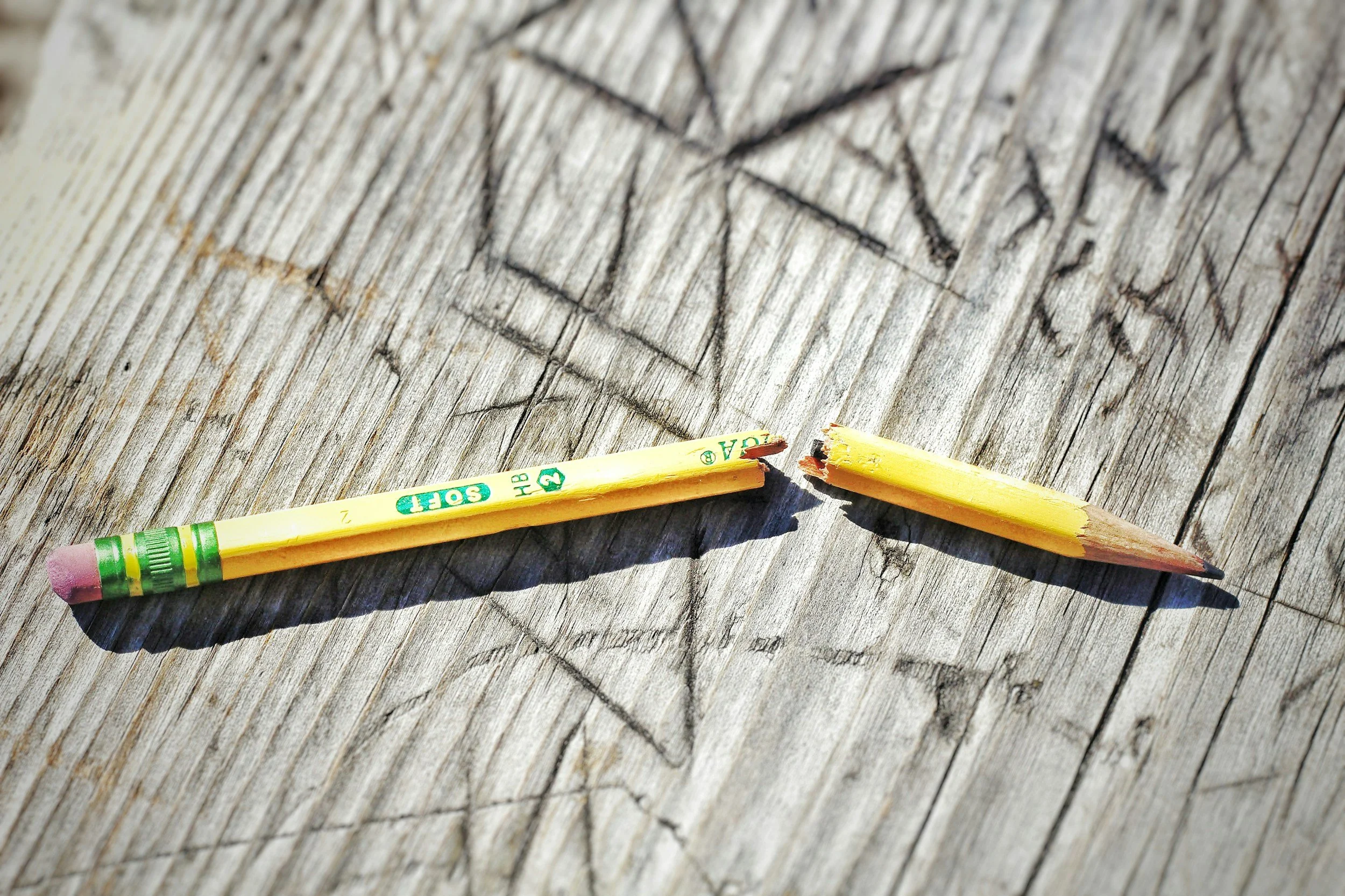
We Need To Talk About Stress…
Stress is a symptom of underlying psychological discounts. To effectively manage stress, we need to address these discounts at their roots.
Stress
We all experience it, a sense of overwhelm, a feeling of dread, feeling frozen and unable to cope. Stress can manifest itself in high blood pressure, short temper, shutting down or running away. But what exactly is stress, and can we learn to deal with it? People talk about managing stress, but a lot of the time management techniques are a distraction, another thing on the to-do list rather than a genuine solution.
A stress reaction occurs when we are confronted with a situation which we feel unequipped for but obliged to deal with. In essence, stress is a fear of failure, and the consequences of it. I would argue that it is this fear, and not the stress it’s self which causes the body to react in the way it does to stress, and that short temper (fight,) running away (flight) or shutting down (freeze) are the limbic system’s way of dealing with this very real fear.
A question I often ask my clients is how old they felt when they were last in a stressful situation. More often than not, they respond with experiencing themselves as a young child. There is good reason for this. As a young child we were vulnerable in the world. Uninformed, unexperienced and reliant on the care and assistance of others. When care and assistance were not administered where required, our limbic system took over to get us through whatever situation we were in.
The limbic system can be useful in all sorts of situations where we are genuinely incapable of doing anything to help ourselves (think of meeting a bear in the woods), but it can also cause us to react inappropriately in other situations (fight, flight or freeze).
Next time you are feeling stressed, ask yourself this -how old do you feel, are you genuinely incapable of helping yourself in this situation, or are you reverting to an instinctive childhood coping mechanism and, in the process, ignoring the real options you have in the here and now?
If the stress is deadline related, are you discounting the option of asking for assistance or postponement? If the stress is relationship related are you discounting the options of talking? If the stress is overwhelm related, are you discounting the option of politely saying no? All these options are frequently discounted, possibly through having had a bad experience in the past, possibly through grandiosity (blinkered, black and white thinking), but by subconsciously discounting these options you are limiting your responses to stress inducing situations and reverting to reliance on your limbic system.
If you take anything from this post, let it be this, stress is not inevitable, it is a response, and responses can be changed. Sometimes we need help in raising awareness of what our options are and why we automatically discount them, and that is where therapy and counselling can help.

What is Proactive Therapy?
This blog post focusses on changing attitudes to therapy and counselling and discusses the benefits of pro-active therapy as opposed to therapy in a crisis management context.
What is Proactive therapy?
There is a common misconception that therapy and counselling is reserved for people in active crisis. Whilst this may be true with NHS funded options, private therapy is for anyone and everyone who wants to talk, no matter what they are experiencing.
Therapy can be invaluable for resolving mental health crises, but is equally important when it comes preventing crises in the first place.
We all experience underlying stresses and frustrations, be it at work, at home, or socially. Those friends who wind you up, the things you partner does that frustrate you, the ‘yes, but’ person in the office…if we do nothing about these and constantly adapt our behaviours to what we believe to be suitable, these things just build up and can result in eventual explosion or exhaustion.
Proactive therapy is about bringing these nagging feelings to the fore and addressing them before they become an issue. Call it maintenance if you will, after all, you don’t wait until the wheels have fallen off before you take your car to the garage!
Through talking about these issues and what you think and feel about them, patterns can start to emerge that you weren’t conscious of before. These patterns of thinking, feeling and behaving might, outside of your awareness, have be responsible for all sorts of unsatisfactory outcomes in the past. Failed relationships, frustrated expectations, missed promotions, and feelings of helplessness and anger to name but a few examples.
Through therapy, these patterns can be changed. Through analysing historical situations and their outcomes, our future reactions can be redetermined, and better outcomes can be achieved.
The UK is catching up with the global trend towards de-stigmatising therapy, but there is still a way to go. In a 2025 conducted by the BACP, nearly two thirds of people reported having struggled with mental health in the past 5 years, but only one third had attended therapy, and whilst there has been a decline in the percentage of people who believe there is a stigma attached to therapy, this figure still stands at 42%.
So how can this gap be bridged? I believe that seeing a therapist, and being open about it, is not a sign of weakness but one of strength, and a signifier that an individual is committed to long term self-improvement. In turn, therapy should not be marketed solely as a service for people in crisis, but a service for anyone who wants to become more emotionally resilient and to benefit from the knock-on effects of improved emotional awareness.

“The Greatest Love of All”
It was Whitney Houston, and George Benson before her, who immortalised the sentiment ‘I believe that children are our future’ in the song ‘The Greatest love of All’. Whilst this is undoubtedly a true and accurate statement, ask any Psychotherapist and they will tell you that not only are children our future, but they are also our past and present.
But what is this ‘child’ that therapists talk about?
Simply put, it is everything that happened to us in childhood which formed our world view, and in turn the way we react to stimulus in accordance with our world view. The child that experienced all of this, and made the decisions on how best to survive is still very much present in the here and now.
Try and think back to the last time you got frustrated….really frustrated, uncontrollably so. Perhaps you shouted, perhaps you stormed out of the room, whatever your reaction, I can guarantee that looking back you wouldn’t describe it as rational.
Again, think back to the last time you felt despondent….hopeless, utterly lost. Maybe you cried, maybe you hid, maybe you blamed the world. Again, I can guarantee that looking back, you wouldn’t describe the reaction as appropriate.
Finally, think of a time when you were in love, madly in love…infatuated. You may have pined, you may have sacked off work to see your belle or beau, nothing felt complete without them. Once more, looking back, I don’t think you’d describe this as logical.
THIS is the child that therapists talk about, coming to the fore, and the truth is that this child, the result of all our past experience, is in control of all our big feelings in the here and now. We carry it around with us and sometimes it steals the show. It gets us in trouble and leaves us feeling hopeless, but it also lets us love, laugh and be silly. The child inside us is crucial to our emotional wellbeing, and like any child, it needs looking after.
In the previous examples, can you identify how old you felt in the moment of storming out, blaming the world or deciding to pull a sickie? Now picture yourself at that age… what are you wearing? How are you standing? Do you have a prop? What was your hair and skin like? What was going on for that child at the time and how is this feeling being brought back in the here and now? What is making them angry, what is making them sad? What is making them laugh and smile?
If you feel this part of you is going through trouble, offer them a strong, safe and capable hand. If they have an unmet need, meet it with all the love and power and wisdom that you have in the here and now. If they need comfort, give it to them in abundance with confidence and protection. If they are feeling loved and complete and free, go on the journey with them. It is never too late to give our inner child what it might have missed out on in our childhood, but it is also never too late to play.
Over time, through practice and with the right therapy, we can integrate this method of self regulation to become a seamless part of present day life. This not only helps us react better to difficult situations and achieve positive outcomes, but it also enables us to let our hair down when appropriate and be truly congruent and authentic. The world doesn’t have to be scary for our inner child, they have you, in all your power to look after them, to teach them, guide them and love them.
Listening to the song, you can’t help but feel in her voice the love, power, protection and pride that Whitney and George are directing to what I believe to be their respective inner children. We all have the passion and the strength to deliver such a message to ourselves, and even if this is not immediately available, we CAN find it… we just need to be shown how. Only once we can truly love our inner child, unwaveringly and unconditionally, can we be free to fully and unconditionally love anyone else.
Learning to love yourself opens up the doors to living autonomously from the past, making it truly the greatest love of all.

The Power Of Naming
In my experience as a therapist, without doubt one of the most important concepts I have come across is that of naming.
When humankind uttered it’s first word, it was undoubtedly a noun. It must have been necessary to convey what something was before communicating what to do with it and how!
Over the millions of years since this first noun was uttered, we have developed a nuanced and complex system of communicating, in hundreds of languages across the world. You would think by now we had a name for everything!
In the myriad of human thoughts, feelings and behaviours, these names can range from happy to sad, depression to elation, shame to pride, there a thousands to choose from, but what if we go deeper? What if we look at the more complex and abstract concepts behind the formation of these feelings and their place in our personalities as reactions to external stimuli. We don’t get angry at random after all, something provokes it. We don’t feel happy for no reason, something makes us smile.
Different strokes for different folks is a saying that rings particularly true in the field of psychotherapy. People react differently and importantly, UNIQUELY to different stimuli in different situations. How do we name something which is unique to, yet shared by each of the 8 Billion plus people sharing this earth?
These sets of reactions, these patterns of thinking, feeling and behaving can be categorised into groups, and Psychotherapists have borrowed nouns to name these phenomena.
Transactional Analysis theory names these groups and patterns of thoughts, feelings and behaviours as The Parent, The Adult and The Child Ego States. Everyone has them, and they form the key parts of our personality. If we are confidently feeling, thinking or behaving in a way which we rigidly believe to be right, irrespective of other people’s opinions, asking no questions and operating on autopilot, we are likely to be acting in our Parent Ego State (Programme). If we are experiencing strong positive or negative emotions and are struggling to control our reactions (fight/flight/freeze), we are likely to be in our Child Ego State (Reactive). If we are analysing input and using all current information to effectively achieve the required outcome from a situation, we are acting in our Adult (Rational).
These archaic and often outdated packets of information (Parent) and reactions (Child) can cause us problems in the present day, even spending too much time in our Adult Ego State can get in the way of intimacy and spontaneity.
Through the process of Therapy, as we group together our reactions to and behaviours in present day situations into these categories, we can start to understand what triggers bring around which ego state, and through building a nurturing and understanding relationship with our ego states, we can begin to choose which one we employ, when and how.
None of this would be possible without being able to name the parts of our personality we need to work with. This is why Psychoeducation and naming in particular plays such a major role in Transactional Analysis Psychotherapy.
What is in a name?
Quite a lot it turns out!

The Script We Chose
It All Begins Here
Why do people come to therapy?
The answer to this question will be different for every individual who walks through the therapy room door. There are an infinite number of reasons that people will attend therapy.
Mostly of their own accord, a person will seek therapy because they are experiencing a thought, feeling or behaviour that is troubling them and that they would benefit from changing.
Whether a client knows exactly what they want to change or not (a recurring behavioural pattern such as addiction, or just a feeling of being stuck), it is the therapist’s role to help the client understand why they think, feel and behave the way they do and to identify ways in which they can improve their quality of life.
Change is a core part of therapy, and contracting for change is a core principle of Transactional Analysis.
It is one thing to be aware of the need for change, even to identify which thought, feeling or behaviour needs to change, but in order to make effective and lasting change it is critical to understand how we got here in the first place.
We are all born into this world with a clean slate. It is mostly environmental factors and how we interpret them that influence the way our personalities develop. From birth, an infant is in a constant state of threat. To survive, it is critical that they develop strategies to get their needs met. It is through the way these needs are met that the infant figures out the best to survive. This is the very beginning of script formation.
Script, as a TA concept, is an unconscious life plan developed in infancy and reinforced by evidence from events occurring in our lives.
Initially Script is formed in relation to verbal and non-verbal messages, commands and attributions and injunctions and permissions, and physical interactions from primary caregivers. How the child interprets these stimuli will determine the decisions they form about themselves and the strategies they employ to best get through life.
These decisions have been defined as conclusions regarding self, self in relation to others, others or quality of life, adopted during childhood as the best means of surviving and getting needs met within the constraints of the child’s ways of feeling and reality testing.
The problems start when these decisions become outdated. When we start to react to stimuli in a way which no longer works in our favour. What worked as a child to survive, does not necessarily work as an adult.
This is where historical enquiry becomes a crucial element of any psychodynamic therapeutic approach.
Where these historical stimuli and decisions can be identified (a recurring phrase heard in childhood like ‘children should be seen and not heard’, ‘it’s like talking to a wall’, being praised for being tidy or chastised for being 'silly', or any individual or recurring event that led to you as a child coming to a concrete conclusion) they can be revisited and the Child decision about the phrase or event can be re-made using all the information and power we have as adults. These re-decisions can be put to practice in the here and now, within the safety of the therapeutic relationship.
Where these decisions cannot be identified (they were made pre-verbally), a therapist will work on a relational level, providing a different experience of self in relation to others, working at changing child perceptions and decisions at a subconscious level.
All of human behaviour is determined by our unique, deeply held and subconscious beliefs about ourselves, the world and our relationship with it, but the good news is that we are not stuck with this forever. With the right help, unhelpful, outdated decisions and beliefs can be identified, re-made, reintegrated, and a whole new show can be put on the road.